🚚 Free Worldwide Shipping on All Orders!Shop Now

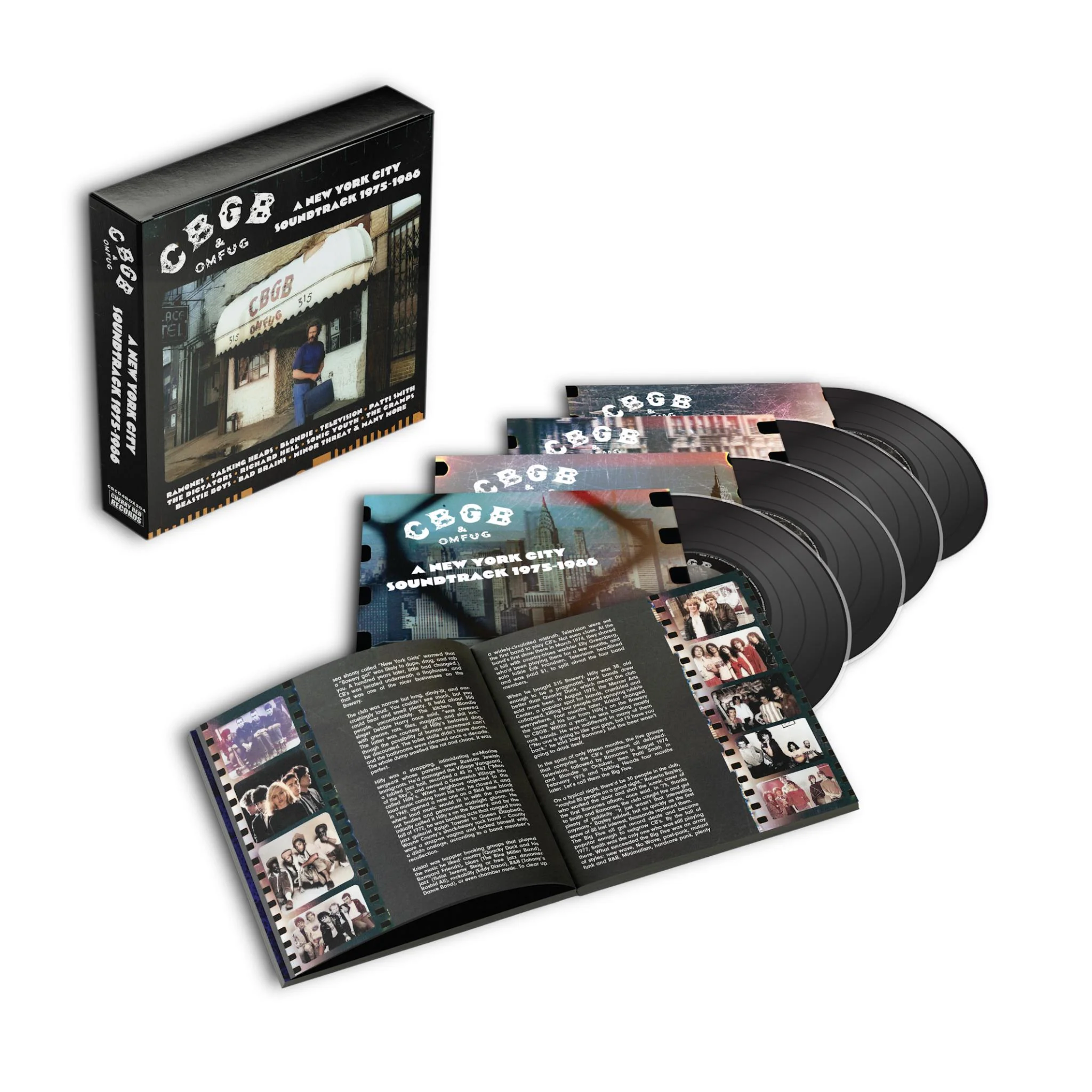
CBGB: A New York City Soundtrack 1975-1986
“CBGB was a place for the dirty people.” - Jimmy Destri of Blondie
“Afterwards, I took off and went crosstown to CBGB’s, the stronghold of the unknown, to be
with my own people.” - Patti Smith
In December 1973 Hilly Kristal changed the name of his roots music bar from Hilly’s on the Bowery to CBGB and altered his musical policy to hire mostly rock bands. He was indifferent to many of them (“No one is going to like you guys, but I’ll have you back,” he told Joey Ramone), blissfully unaware of how important his scruffy little club would soon become.
In the span of only 15 months, the five groups that comprise the CBGB’s pantheon all debuted: Television in March 1974, followed by Ramones in August and Blondie in October, then Patti Smith in February 1975 and Talking Heads four months later.
Those five groups all quickly got record deals and became popular enough to outgrow CBGB’s.
By the fall of 1977, Smith was the only one who was still playing there. What succeeded the Big Five was an array of new and retro styles, all of which feature here: No Wave (Sonic Youth, Mars, DNA, Bush Tetras), post-punk (Ritual Tension, Unknown Gender, Khmer Rouge), mutant funk and R&B (James Chance & The Contortions, Mink DeVille), art-rock bands (R.L. Crutchfield’s Dark Day, The Revelons, Erasers, Jeff and Jane Hudson) hardcore punk (Minor Threat, Bad Brains, Vatican Commandos, Beastie Boys), and lots of power pop (Sorrows, The dBs, The Rudies, The Miamis, The Paley Brothers) .
The club’s best-known bands are present on this compilation but we’ve also revived interest in dozens of unfairly forgotten acts that, for a moment in time, made an album, EP, 45, or even a demo that crackled with innovation, wit, and joy.
CBGB no longer exists, at least not in the physical plane, but what happened between those soot-filled, beer-stinking walls continues to reverberate around the world.
“Afterwards, I took off and went crosstown to CBGB’s, the stronghold of the unknown, to be
with my own people.” - Patti Smith
In December 1973 Hilly Kristal changed the name of his roots music bar from Hilly’s on the Bowery to CBGB and altered his musical policy to hire mostly rock bands. He was indifferent to many of them (“No one is going to like you guys, but I’ll have you back,” he told Joey Ramone), blissfully unaware of how important his scruffy little club would soon become.
In the span of only 15 months, the five groups that comprise the CBGB’s pantheon all debuted: Television in March 1974, followed by Ramones in August and Blondie in October, then Patti Smith in February 1975 and Talking Heads four months later.
Those five groups all quickly got record deals and became popular enough to outgrow CBGB’s.
By the fall of 1977, Smith was the only one who was still playing there. What succeeded the Big Five was an array of new and retro styles, all of which feature here: No Wave (Sonic Youth, Mars, DNA, Bush Tetras), post-punk (Ritual Tension, Unknown Gender, Khmer Rouge), mutant funk and R&B (James Chance & The Contortions, Mink DeVille), art-rock bands (R.L. Crutchfield’s Dark Day, The Revelons, Erasers, Jeff and Jane Hudson) hardcore punk (Minor Threat, Bad Brains, Vatican Commandos, Beastie Boys), and lots of power pop (Sorrows, The dBs, The Rudies, The Miamis, The Paley Brothers) .
The club’s best-known bands are present on this compilation but we’ve also revived interest in dozens of unfairly forgotten acts that, for a moment in time, made an album, EP, 45, or even a demo that crackled with innovation, wit, and joy.
CBGB no longer exists, at least not in the physical plane, but what happened between those soot-filled, beer-stinking walls continues to reverberate around the world.
“CBGB was a place for the dirty people.” - Jimmy Destri of Blondie
“Afterwards, I took off and went crosstown to CBGB’s, the stronghold of the unknown, to be
with my own people.” - Patti Smith
In December 1973 Hilly Kristal changed the name of his roots music bar from Hilly’s on the Bowery to CBGB and altered his musical policy to hire mostly rock bands. He was indifferent to many of them (“No one is going to like you guys, but I’ll have you back,” he told Joey Ramone), blissfully unaware of how important his scruffy little club would soon become.
In the span of only 15 months, the five groups that comprise the CBGB’s pantheon all debuted: Television in March 1974, followed by Ramones in August and Blondie in October, then Patti Smith in February 1975 and Talking Heads four months later.
Those five groups all quickly got record deals and became popular enough to outgrow CBGB’s.
By the fall of 1977, Smith was the only one who was still playing there. What succeeded the Big Five was an array of new and retro styles, all of which feature here: No Wave (Sonic Youth, Mars, DNA, Bush Tetras), post-punk (Ritual Tension, Unknown Gender, Khmer Rouge), mutant funk and R&B (James Chance & The Contortions, Mink DeVille), art-rock bands (R.L. Crutchfield’s Dark Day, The Revelons, Erasers, Jeff and Jane Hudson) hardcore punk (Minor Threat, Bad Brains, Vatican Commandos, Beastie Boys), and lots of power pop (Sorrows, The dBs, The Rudies, The Miamis, The Paley Brothers) .
The club’s best-known bands are present on this compilation but we’ve also revived interest in dozens of unfairly forgotten acts that, for a moment in time, made an album, EP, 45, or even a demo that crackled with innovation, wit, and joy.
CBGB no longer exists, at least not in the physical plane, but what happened between those soot-filled, beer-stinking walls continues to reverberate around the world.
“Afterwards, I took off and went crosstown to CBGB’s, the stronghold of the unknown, to be
with my own people.” - Patti Smith
In December 1973 Hilly Kristal changed the name of his roots music bar from Hilly’s on the Bowery to CBGB and altered his musical policy to hire mostly rock bands. He was indifferent to many of them (“No one is going to like you guys, but I’ll have you back,” he told Joey Ramone), blissfully unaware of how important his scruffy little club would soon become.
In the span of only 15 months, the five groups that comprise the CBGB’s pantheon all debuted: Television in March 1974, followed by Ramones in August and Blondie in October, then Patti Smith in February 1975 and Talking Heads four months later.
Those five groups all quickly got record deals and became popular enough to outgrow CBGB’s.
By the fall of 1977, Smith was the only one who was still playing there. What succeeded the Big Five was an array of new and retro styles, all of which feature here: No Wave (Sonic Youth, Mars, DNA, Bush Tetras), post-punk (Ritual Tension, Unknown Gender, Khmer Rouge), mutant funk and R&B (James Chance & The Contortions, Mink DeVille), art-rock bands (R.L. Crutchfield’s Dark Day, The Revelons, Erasers, Jeff and Jane Hudson) hardcore punk (Minor Threat, Bad Brains, Vatican Commandos, Beastie Boys), and lots of power pop (Sorrows, The dBs, The Rudies, The Miamis, The Paley Brothers) .
The club’s best-known bands are present on this compilation but we’ve also revived interest in dozens of unfairly forgotten acts that, for a moment in time, made an album, EP, 45, or even a demo that crackled with innovation, wit, and joy.
CBGB no longer exists, at least not in the physical plane, but what happened between those soot-filled, beer-stinking walls continues to reverberate around the world.
$14.64
Original: $48.80
-70%CBGB: A New York City Soundtrack 1975-1986—
$48.80
$14.64Description
“CBGB was a place for the dirty people.” - Jimmy Destri of Blondie
“Afterwards, I took off and went crosstown to CBGB’s, the stronghold of the unknown, to be
with my own people.” - Patti Smith
In December 1973 Hilly Kristal changed the name of his roots music bar from Hilly’s on the Bowery to CBGB and altered his musical policy to hire mostly rock bands. He was indifferent to many of them (“No one is going to like you guys, but I’ll have you back,” he told Joey Ramone), blissfully unaware of how important his scruffy little club would soon become.
In the span of only 15 months, the five groups that comprise the CBGB’s pantheon all debuted: Television in March 1974, followed by Ramones in August and Blondie in October, then Patti Smith in February 1975 and Talking Heads four months later.
Those five groups all quickly got record deals and became popular enough to outgrow CBGB’s.
By the fall of 1977, Smith was the only one who was still playing there. What succeeded the Big Five was an array of new and retro styles, all of which feature here: No Wave (Sonic Youth, Mars, DNA, Bush Tetras), post-punk (Ritual Tension, Unknown Gender, Khmer Rouge), mutant funk and R&B (James Chance & The Contortions, Mink DeVille), art-rock bands (R.L. Crutchfield’s Dark Day, The Revelons, Erasers, Jeff and Jane Hudson) hardcore punk (Minor Threat, Bad Brains, Vatican Commandos, Beastie Boys), and lots of power pop (Sorrows, The dBs, The Rudies, The Miamis, The Paley Brothers) .
The club’s best-known bands are present on this compilation but we’ve also revived interest in dozens of unfairly forgotten acts that, for a moment in time, made an album, EP, 45, or even a demo that crackled with innovation, wit, and joy.
CBGB no longer exists, at least not in the physical plane, but what happened between those soot-filled, beer-stinking walls continues to reverberate around the world.
“Afterwards, I took off and went crosstown to CBGB’s, the stronghold of the unknown, to be
with my own people.” - Patti Smith
In December 1973 Hilly Kristal changed the name of his roots music bar from Hilly’s on the Bowery to CBGB and altered his musical policy to hire mostly rock bands. He was indifferent to many of them (“No one is going to like you guys, but I’ll have you back,” he told Joey Ramone), blissfully unaware of how important his scruffy little club would soon become.
In the span of only 15 months, the five groups that comprise the CBGB’s pantheon all debuted: Television in March 1974, followed by Ramones in August and Blondie in October, then Patti Smith in February 1975 and Talking Heads four months later.
Those five groups all quickly got record deals and became popular enough to outgrow CBGB’s.
By the fall of 1977, Smith was the only one who was still playing there. What succeeded the Big Five was an array of new and retro styles, all of which feature here: No Wave (Sonic Youth, Mars, DNA, Bush Tetras), post-punk (Ritual Tension, Unknown Gender, Khmer Rouge), mutant funk and R&B (James Chance & The Contortions, Mink DeVille), art-rock bands (R.L. Crutchfield’s Dark Day, The Revelons, Erasers, Jeff and Jane Hudson) hardcore punk (Minor Threat, Bad Brains, Vatican Commandos, Beastie Boys), and lots of power pop (Sorrows, The dBs, The Rudies, The Miamis, The Paley Brothers) .
The club’s best-known bands are present on this compilation but we’ve also revived interest in dozens of unfairly forgotten acts that, for a moment in time, made an album, EP, 45, or even a demo that crackled with innovation, wit, and joy.
CBGB no longer exists, at least not in the physical plane, but what happened between those soot-filled, beer-stinking walls continues to reverberate around the world.